
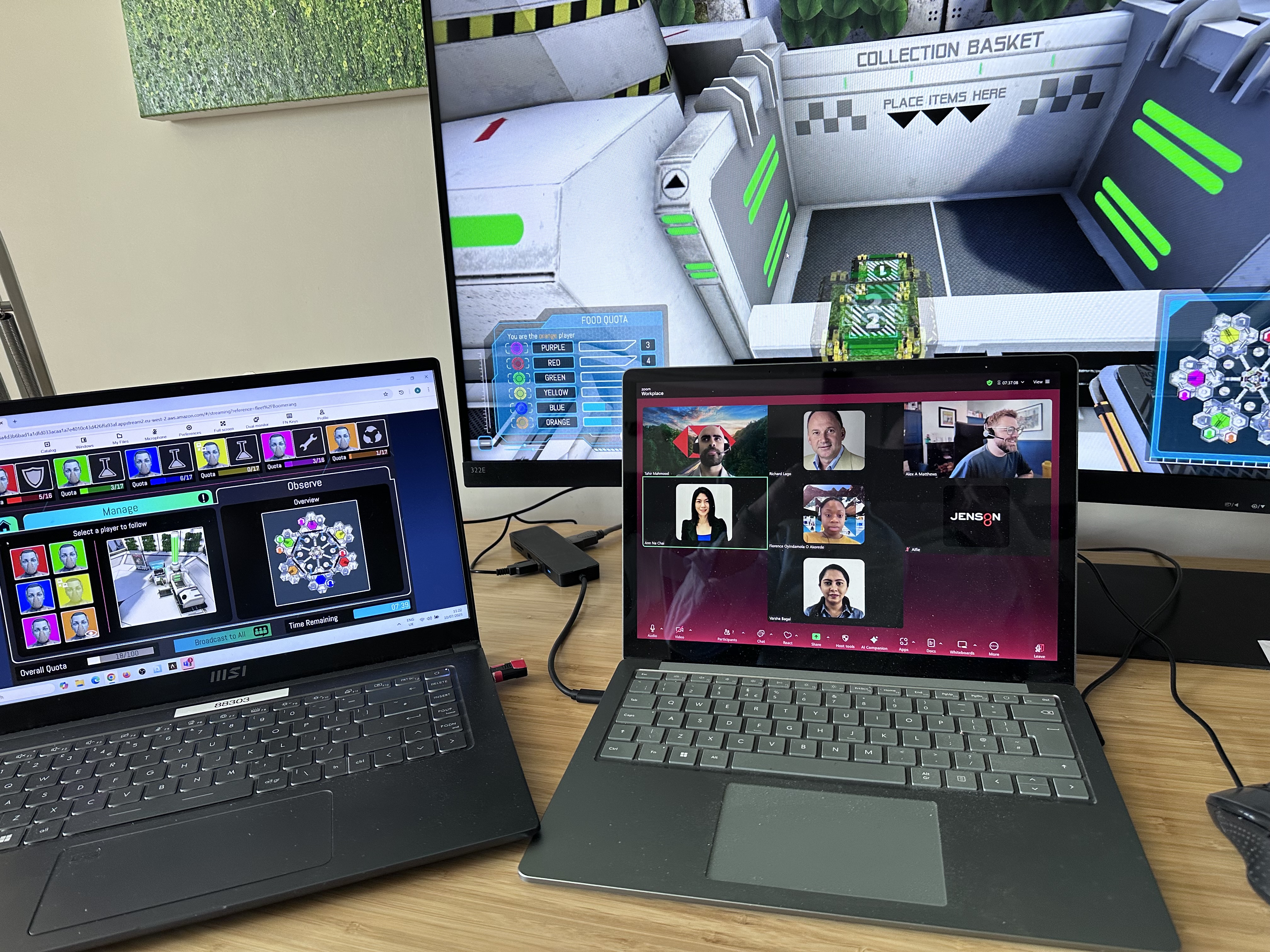
Teamship is what turns individual capability into collective performance — the difference between organisations that coordinate work and those that compound it.
In large enterprises, productivity is rarely constrained by talent. It is constrained by how effectively that talent works together. Strategy, structure and incentives matter, but day-to-day results are determined by whether people trust each other, communicate clearly and take shared responsibility for outcomes. Teamship captures this dynamic: it is the quality of how work is actually done between people, not just the quality of the people themselves.
Without strong teamship, scale becomes a liability. As organisations grow, dependencies multiply, decision latency increases and accountability diffuses. Work slows not because people lack skill, but because alignment breaks down. Strong teamship counteracts this by creating clarity of roles, psychological safety to surface issues early, and shared ownership of goals. The result is faster decision-making, fewer hand-offs, and less energy wasted on internal friction.
Teamship also has a direct impact on execution quality. Teams with high trust and behavioural alignment adapt more quickly under pressure, recover faster from failure, and make better trade-offs when information is incomplete. In complex enterprise environments — matrixed structures, hybrid teams, global operations — this adaptability is not a “soft” advantage. It is a material driver of delivery speed, customer outcomes and operational resilience.
Crucially, teamship cannot be trained through individual development alone. Sending leaders on courses or upskilling employees in isolation assumes performance emerges automatically when individuals return to their desks. In reality, behaviour is contextual. How people act together under real constraints determines outcomes. Enterprises that invest in teamship focus on shared experiences, collective feedback and behavioural practice at team level — because that is where performance either compounds or collapses.
From an efficiency perspective, teamship is one of the highest-leverage investments an enterprise can make. Strong teams require fewer meetings to align, resolve conflict earlier, and sustain momentum without constant managerial intervention. Over time, this reduces burnout, improves retention and frees leadership capacity to focus on strategic work rather than operational repair.
What strong teamship delivers in practice
In our view, teamship will increasingly be treated as core infrastructure rather than culture-work. As AI, automation and distributed work raise the premium on coordination, enterprises that deliberately engineer teamship — and can evidence its impact — will outperform those still optimising individuals in isolation.